Physical Address
304 North Cardinal St.
Dorchester Center, MA 02124
Physical Address
304 North Cardinal St.
Dorchester Center, MA 02124


The rapid pace of urbanization is pushing cities to reinvent the way buildings are designed, operated, and maintained. As more people move into metropolitan areas, the challenge of balancing comfort, efficiency, and sustainability grows increasingly complex. This rising demand has paved the way for innovative smart building management solutions that address fundamental issues such as resource consumption, climate resiliency, and quality of urban life.
Smart building technologies are more than just a trend; they represent a necessary shift toward integrated systems that optimize building performance. Sensors, machine learning, and interconnected digital platforms allow city planners and building managers to make data-driven decisions that enhance energy efficiency while meeting the evolving needs of urban residents. As metropolitan areas become denser and more interconnected, these technologies will play a crucial role in shaping sustainable and resilient cities.
Among the most significant advances are advancements in artificial intelligence (AI), digital twins, and the Internet of Things (IoT). These technologies enable proactive building management, automate complex tasks, and provide early warning for issues ranging from environmental hazards to equipment malfunctions. In parallel, these solutions support city-wide efforts to meet carbon reduction goals, optimize infrastructure, and foster a smarter quality of life for all citizens.
For instance, connected lighting, HVAC control, and occupancy tracking systems are already making buildings healthier, safer, and more productive. As the industry continues to grow, exploring case studies from global leaders in smart building deployment can reveal best practices for other regions striving to modernize their urban infrastructure.
Looking deeper into the ways these technologies are being put to work, cities across the world are leveraging digitalization not only to improve efficiency but also to address challenges related to safety, accessibility, and climate adaptation. These developments reflect a growing recognition that smarter urban buildings can unlock new pathways toward sustainability and resilience.
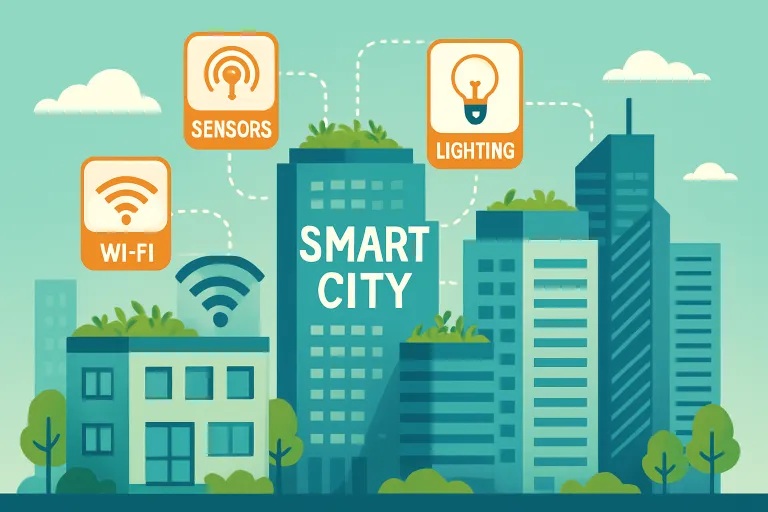
Artificial intelligence is rapidly becoming the backbone of smart building ecosystems, where cloud-based intelligence powers self-learning systems for predictive analytics and operational efficiency. One revolutionary concept is the digital twin, a dynamic digital replica of a real-world building or city infrastructure. By aggregating data from sensors, cameras, and other IoT devices, digital twins enable facility managers to simulate scenarios, identify energy inefficiencies, and test solutions before implementation.
A standout example is Singapore’s Virtual Singapore initiative, which creates a 3D digital twin of the entire city. This model provides interactive layers for urban planners, enabling them to visualize developments, simulate responses to natural disasters, and allocate resources in real time. Digital twins also foster better collaboration between governments, architects, and engineers, ensuring stakeholder alignment across the urban planning process.
IoT devices are central to modern smart buildings, offering seamless integration among disparate subsystems, such as lighting, HVAC, security, and more. Sensors and connected platforms provide granular data about environmental conditions, occupancy, and equipment status. These data points are fed into management systems that can automatically adjust building operations, ensuring optimum comfort and significant energy savings.
For example, advanced sensors monitor air quality and temperature, triggering ventilation systems or shading automatically to maintain ideal indoor conditions. Occupancy analytics help building owners optimize space utilization, streamline maintenance, and reduce operational costs. This holistic approach makes buildings flexible and responsive, reducing their environmental impact while elevating the workplace experience. According to The New York Times, smart offices and homes are also key to long-term real estate value and urban livability.
Retrofitting legacy buildings is a critical strategy for cities with older infrastructure. Milan’s Pirelli 35 project is a prime example, where an iconic office tower is being transformed into a highly efficient smart building. By integrating next-generation insulation, smart HVAC systems, and IoT-enabled monitoring, the project aims to cut energy usage by roughly 60% while reducing carbon emissions by 2,000 tons per year. More information is available in the EuropaWire press release.
Such retrofits are setting the benchmark for national and international sustainability targets, especially as Europe pushes for net-zero buildings by 2030. The lessons from Pirelli 35 demonstrate that existing structures, not just new construction, can serve as exemplars of urban sustainability and future-readiness.
Despite their promise, the widespread implementation of smart building technologies entails notable challenges. Privacy and data security top the list, with vast amounts of personal and operational information flowing through interconnected systems. Policymakers and technology providers must collaborate to develop robust frameworks that ensure transparency and user protection.
Integration can also require significant upfront investment, particularly for retrofitting old buildings or synchronizing multiple systems from different manufacturers. It’s vital for stakeholders to assess long-term operational savings and environmental benefits against these costs and to prioritize interoperable, future-proof solutions.
The trajectory of smart building technology is unmistakably upward, with cities experimenting with even more sophisticated tools such as augmented reality (AR) and edge computing. AR platforms empower city officials and stakeholders to interact visually with urban data. At the same time, edge computing ensures instant processing close to the data source, driving new possibilities for emergency response and real-time urban management.
As these trends take shape, collaboration among public sector entities, private developers, and technology vendors will become increasingly vital. Cities that invest wisely in smart building infrastructure stand to gain significant competitive advantages as global models for sustainable urban development.
The rise of smart building technologies signals a transformational era in urban development. By deploying AI, IoT integration, and advanced data analytics, future cities can drastically reduce their environmental footprint while delivering healthier, smarter, and more resilient spaces for all. As real-world examples continue to validate the benefits of this approach, the next generation of urban dwellers will find themselves living in cities that are as intelligent as they are inspiring.