Physical Address
304 North Cardinal St.
Dorchester Center, MA 02124
Physical Address
304 North Cardinal St.
Dorchester Center, MA 02124

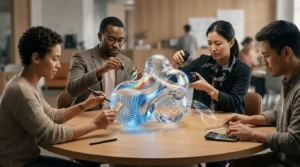
Content used to belong to a single team. Marketing would handle campaigns, design would focus on visuals, and product teams would contribute when needed. Collaboration existed, but it was often structured and limited to specific stages.
That structure is beginning to loosen. AI video is not just speeding up content creation. It is changing how different departments participate in the process. Boundaries are becoming less rigid, and collaboration is becoming more continuous.
What used to be handoffs is now becoming shared ownership. This shift is also encouraging teams to rethink how they coordinate on a daily basis.
Traditional workflows often placed content responsibility within a specific department. Other teams contributed, but rarely shaped the process directly.
This created a model where:
AI video is shifting this model. Instead of isolated contributions, multiple teams can now engage with content more directly.
To understand how this works in practice, AI Video Generator allows teams to create and refine content within a shared environment. Higgsfield supports this by enabling different departments to interact with the same content in real time. This changes content from a departmental task to a shared activity. It also encourages a more collaborative mindset across teams.
One of the biggest changes is when collaboration happens. In traditional workflows, departments often came in at different stages. Now, collaboration is happening earlier. Many teams are focusing on Increasing collaboration between different business units as they look to align more effectively from the start.
This early involvement allows:
Higgsfield enables this by allowing teams to work together from the initial stages of content creation. This reduces misalignment later in the process. It also leads to stronger alignment between business goals and creative output.
Cross-department collaboration often struggles with communication gaps. Different teams have different priorities, language, and expectations. AI video helps bridge these gaps by making content more accessible. Instead of abstract discussions, teams can work with visual outputs directly.
This makes it easier to:
Higgsfield supports this by providing a shared workspace where content can be viewed and refined collaboratively. This improves how teams communicate across functions. It also reduces misunderstandings that often slow down progress.
Visibility is a key factor in collaboration. When teams cannot see how content evolves, coordination becomes difficult. AI video workflows introduce greater transparency.
Teams can:
Higgsfield enables this visibility by allowing teams to interact with content in real time. The importance of maintaining alignment and visibility is also reflected in workflows where multiple outputs retain a cohesive identity, strengthening recognition over time. This clarity reduces confusion and improves collaboration. It also helps teams stay accountable for their contributions.
As collaboration increases, roles begin to overlap. Team members are no longer confined to specific functions. Instead, they contribute based on context and expertise.
This leads to:
An AI video generator supports this by allowing contributors to engage with different aspects of content. Higgsfield reflects this shift by enabling a more integrated workflow. This creates a more flexible team structure. It also encourages cross-functional thinking within teams.
Alignment is often the most time-consuming part of collaboration. Different teams need to agree on direction, messaging, and execution. AI video allows alignment to happen more quickly.
Teams can:
Higgsfield supports this by enabling collaborative refinement, reducing the need for extended discussions. This leads to faster decision-making. It also helps teams move forward with greater confidence.
Content becomes stronger when multiple perspectives are included.
Different departments bring different insights:
AI video allows these perspectives to be integrated more effectively. Higgsfield enables teams to refine content collectively, ensuring that different viewpoints are reflected. This leads to more well-rounded content. It also increases the relevance of content across different audiences.
Content is no longer created in isolated projects. It is continuous. This requires ongoing collaboration rather than one-time coordination.
AI video supports this by allowing teams to:
Higgsfield enables teams to manage this continuous workflow within a shared environment. For those exploring how cross-functional collaboration is evolving, cross-functional team strategies provide useful insights into managing collaboration effectively.
This helps teams sustain collaboration beyond individual projects. It also ensures that collaboration becomes a habit rather than an exception.
More collaboration can sometimes create complexity. When too many voices are involved, decision-making can slow down. This creates a need for balance.
Teams need to:
Higgsfield supports this by providing structure within flexibility, allowing teams to collaborate without losing focus. This balance is essential for effective collaboration. It also helps teams maintain efficiency as they scale.
Cross-department collaboration is becoming a central part of content creation. AI video is enabling this shift by making workflows more transparent, flexible, and accessible.
Higgsfield shows how teams can work together more effectively by sharing ownership, aligning earlier, and refining content collectively. The future of content will not be created by isolated teams. It will be shaped by how well different teams work together.