Physical Address
304 North Cardinal St.
Dorchester Center, MA 02124
Physical Address
304 North Cardinal St.
Dorchester Center, MA 02124

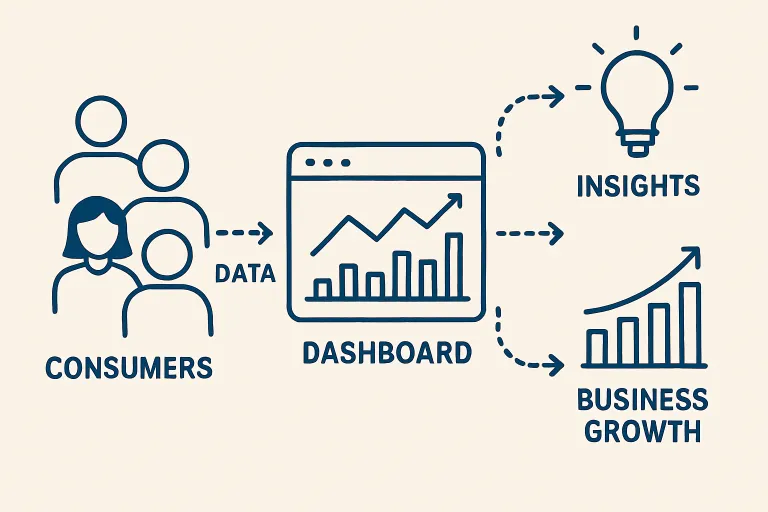
In today’s digital-first marketplace, businesses are collecting more consumer data than ever before. The real challenge is not just gathering information but transforming it into strategies that drive growth and create competitive advantages. By analyzing consumer behavior, organizations can turn raw data into valuable insights to guide their growth trajectory. Platforms like Material Consumer Insights help businesses harness data to drive strategic decision-making and enhance customer engagement.
Consumer data, when interpreted correctly, enables businesses to deliver more relevant products and services. This approach not only elevates the customer experience but also strengthens brand loyalty, increases return on investment, and optimizes marketing spend. Leaders across industries are prioritizing data-driven decision-making to stay ahead in an increasingly competitive environment.
By embedding analytics into every layer of business operations, companies gain a holistic understanding of their customers’ motivations and preferences. This insight opens doors to new market opportunities and more tailored product offerings. According to Harvard Business Review, embedding analytics and customer-centricity in strategy is fast becoming a hallmark of industry frontrunners.
The push for digital transformation means organizations must structure and manage their data responsibly, using best-in-class practices for privacy, compliance, and secure architecture. With a commitment to ethical data use and analytics, businesses can not only strengthen relationships with their customers but also drive long-term, sustainable profit.
Consumer data goes far beyond simple demographics or transaction records. It includes browsing history, real-time social engagement, feedback surveys, and, when available, offline behavior. Properly organized, this data reveals underlying customer sentiment, seasonal buying patterns, and the triggers that lead to conversion.
For example, by analyzing which products are often purchased together or which services enjoy renewed interest after specific campaigns, business leaders can create more effective bundle offers or promotions backed by real behavioral evidence. Collecting data isn’t enough; the real value emerges from contextual analysis and actionable intelligence.
Turning large datasets into strategic action takes sophisticated tools and techniques. Machine learning algorithms and predictive analytics have revolutionized how businesses understand and anticipate consumer needs. According to a McKinsey study, companies that adopt advanced analytics see improvements not only in marketing efficiency but also in customer satisfaction and retention rates. More about these transformative effects can be found in McKinsey’s guide to applying advanced analytics in consumer companies.
Predictive models help forecast purchasing habits, identify at-risk customers, and support cross-selling opportunities. As a result, businesses make more informed decisions, anticipate trends earlier, and proactively address shifts in customer demand.
Personalization is now a baseline expectation for modern consumers. AI-powered engines, using historical and behavioral data, enable product and service recommendations that genuinely resonate with individual shoppers. When customers feel understood, satisfaction and loyalty rise accordingly.
As highlighted in a Forbes Council report, using AI and advanced analytics enables organizations to transform volumes of data into memorable customer journeys, ultimately increasing conversion rates and customer advocacy.
Data-driven marketing empowers teams to deliver more relevant offers, messages, and touchpoints to their ideal customers. By segmenting audiences based on preferences, behaviors, and lifecycle stage, marketers fine-tune spending and messaging, boosting campaign effectiveness and reducing wasted resources.
Moreover, dynamic A/B testing and attribution modeling ensure that every decision is guided by empirical evidence rather than assumptions. This culture of optimization increases not only ROI but also organizational agility.
Armed with real-time consumer feedback and behavioral data, businesses can develop products that closely align with evolving preferences. Early visibility into product strengths and weaknesses, gathered through reviews or usage analytics, helps inform refinements, feature prioritization, and new innovations.
This proactive approach to product development mitigates risk, reduces time-to-market, and ensures offerings meet both current and anticipated customer needs. Studies show that companies that leverage user-centric data in product design achieve higher satisfaction ratings and longer product lifespans.
Collecting and using consumer data carries significant responsibility. Privacy regulations such as GDPR and CCPA require businesses to use transparent, ethical data practices. Clear communication, consent management, and robust governance frameworks are essential for maintaining customer trust and avoiding legal penalties.
Building an organization-wide culture of data stewardship not only limits risks but also reinforces long-term loyalty among privacy-conscious consumers. Respect for data privacy is now a differentiator in the global marketplace.
Many companies struggle with fragmented data sources, legacy systems, and a shortage of analytics expertise. Breaking down data silos and investing in integrated infrastructure is the first step to unlocking full value. Ongoing training and change management are vital, as is fostering cross-functional collaboration between IT, marketing, and product teams.
As businesses invest in digital transformation, leaders need to prioritize resources for scalable, secure data platforms that support real-time operations and strategic innovation.
Converting consumer data into actionable strategies transforms organizations from reactive operators to proactive leaders. With advanced analytics, personalization, and a steadfast commitment to privacy, businesses can optimize the entire customer journey, enhance product offerings, and drive sustained growth. By navigating challenges and embracing a culture of data-driven innovation, companies will secure their advantage in an ever-evolving market.